Technical Notes
Why These Methods Matter
The categories on this page separate pedagogical goals that are often blurred together in classroom practice. A letter-name method answers "what written pitch is this?", a functional solmization answers "what role does this note play in the key?", a neutral-vowel drill answers "can I sustain this line fluently?", and a rhythmatic method answers "where does this sound fall in the meter?"
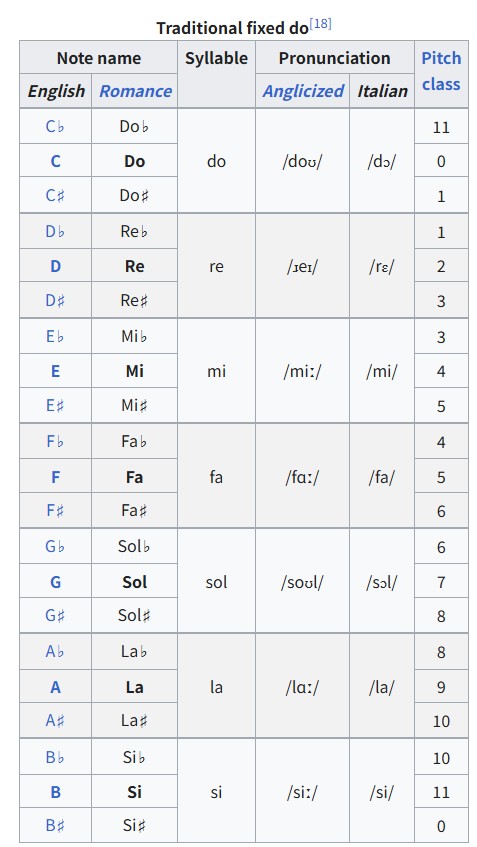
The comparison also exposes a practical singing problem: ordinary letter-name syllables are often too long to sing smoothly, especially once accidentals appear. Fixed-do shortens the syllables, but it reuses the same syllables for different written notes when the key center changes, so it is very likely ineffective for absolute-pitch skill development even while it remains useful in other forms of training.
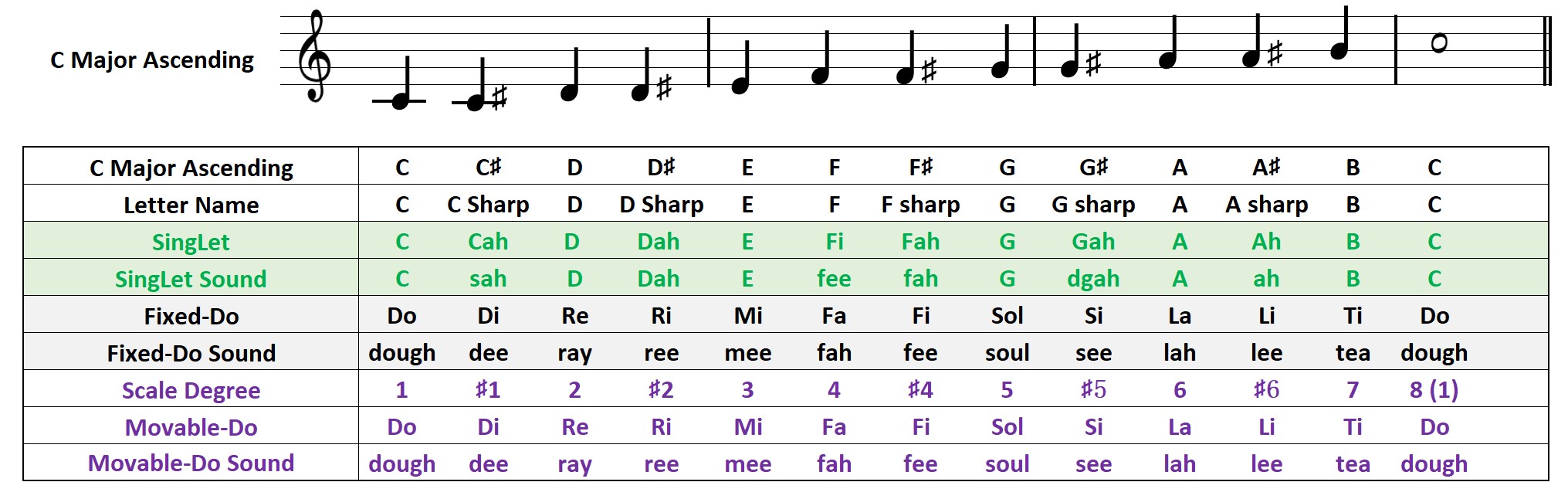
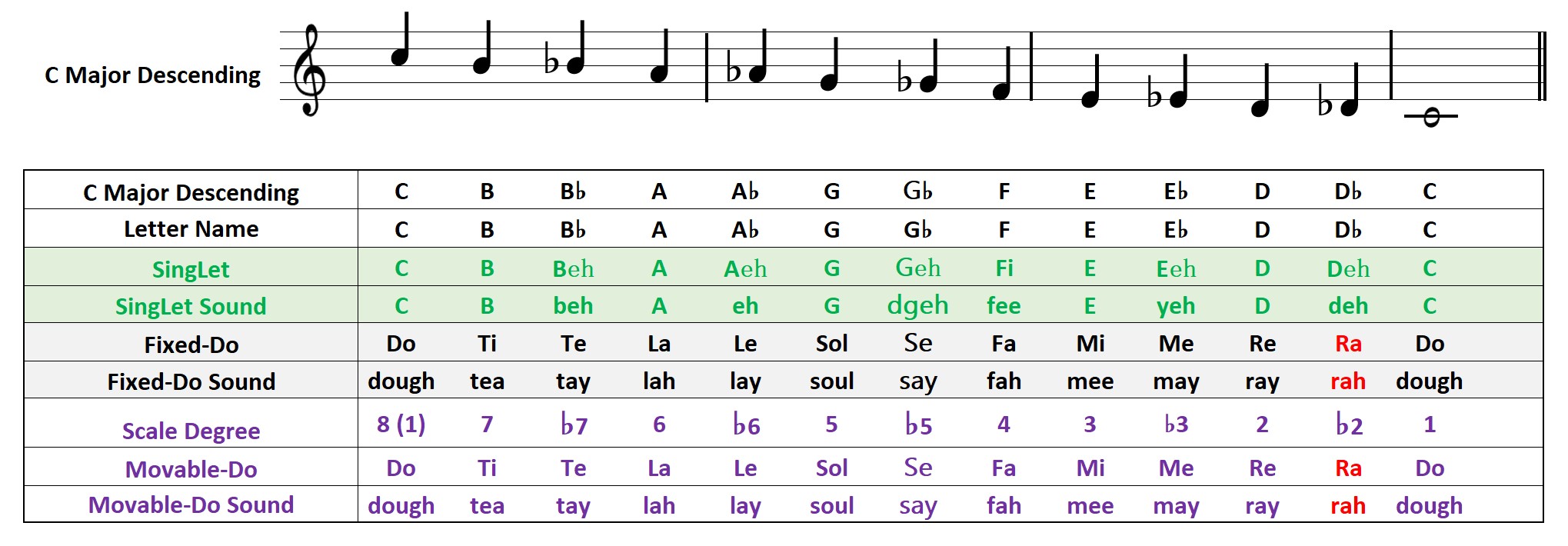
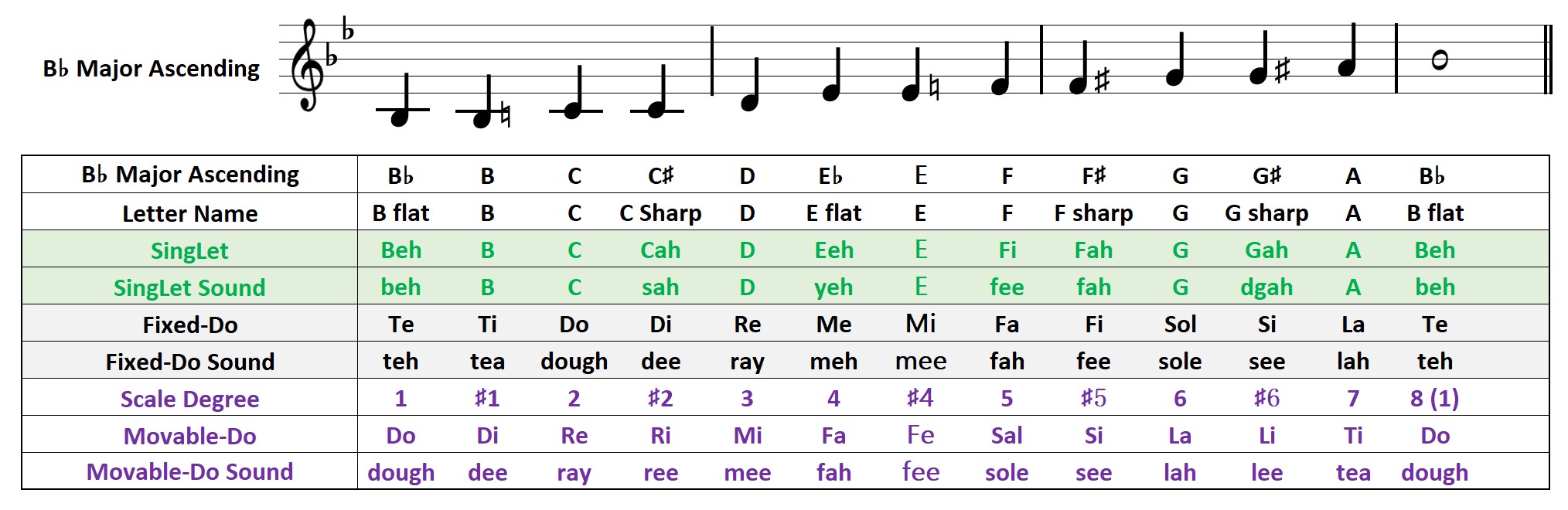
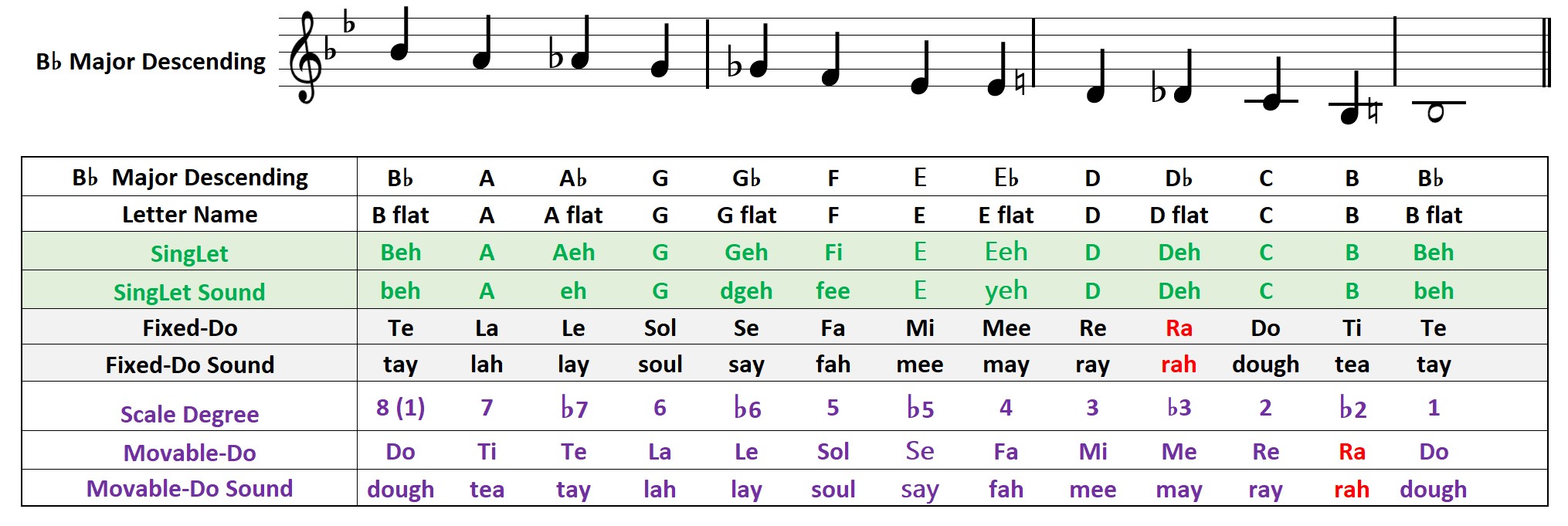
SingLet is designed to overcome both obstacles by keeping note identities direct while remaining compact enough to sing fluently. It therefore offers instant note recognition in performance and is awaiting broader adoption and testing as a tool for absolute-pitch skill development. By contrast, the violet movable-do rows in the B-flat-major chromatic images align directly with scale degree in the same way they do in C major, which is why movable-do is so well suited to relative-pitch development.
Letter Names
Letter-name systems preserve exact note spelling, but syllables such as eff, B-flat, and E-flat are often too long for fluent singing.
Movable-Do
The violet movable-do row stays aligned with scale degree rather than fixed note name, so it keeps the same relative logic across keys and is excellent for relative-pitch development.
SingLet, Absolute Pitch (AP) and Relative Pitch (RP)
SingLet complements movable-do solfège by supporting a dual pathway: direct note-identity practice for AP development alongside scale-degree hearing for RP development.